
Introduction: Fine texture powder coating hides light metal marks by scattering reflected light, and the effect is strongest on indoor panels read at arm's length.
A cabinet door comes off the line with faint scuffs from handling, a few sanding swirls, and the odd trolley bump. On a glossy panel those marks jump out; on a fine texture ultra matt finish they largely stop registering. Buyers notice this immediately and often assume the coating is somehow "thicker" or "heavier" where the marks were. The actual reason sits in surface structure and optics rather than in film weight, and understanding the difference tells you exactly when texture will help and when it will not.
How Surface Texture Changes the Way Light Leaves a Coated Metal Panel
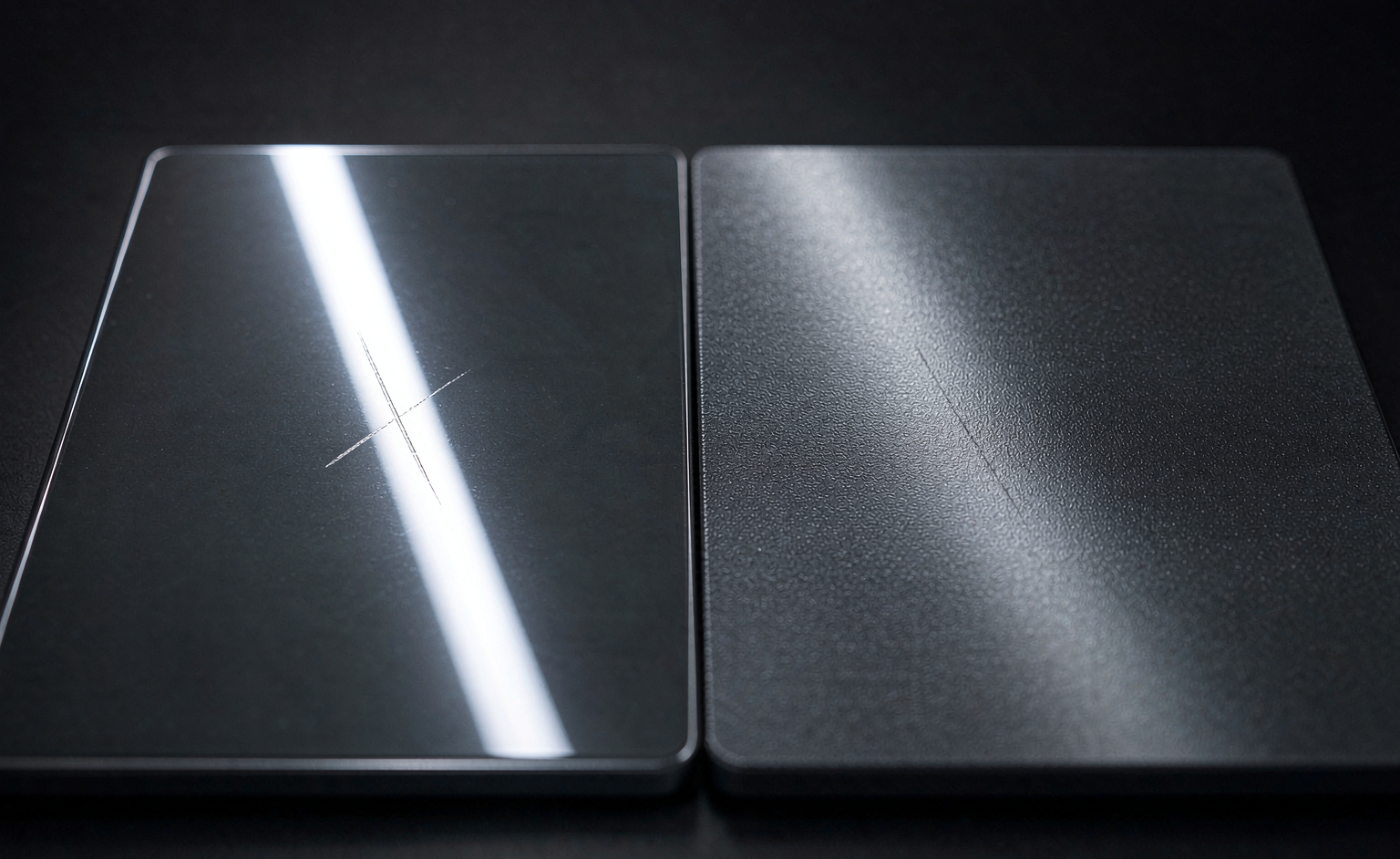
A smooth coating behaves like a shallow mirror. Light arrives at a consistent angle and leaves at a consistent angle, so the eye receives one clean reflection from a large area. A handling scuff breaks that reflection into a narrow band that scatters slightly differently from everything around it, and the eye reads that narrow band as a bright or dark line. The scratch itself may be only a few micrometres deep; what makes it visible is the interruption in an otherwise even field of reflected light. Fine texture replaces that flat reflective plane with a dense pattern of small peaks and valleys formed as the powder melts and cures. Incoming light strikes those surfaces at many angles and leaves the panel in many directions at once. An ultra matt finish rated at ≤10 GU pushes the effect further: almost all the light is diffused and very little specular reflection returns to the viewer, so there is no bright, uninterrupted field left for a scuff to cut across. From a normal viewing angle the panel reads as uniformly soft. The key point is that nothing is being filled in. The peaks and valleys sit on top of the same substrate, and the film stays within its normal build range. Texture changes the geometry of the reflecting surface, which changes where light goes and how much contrast survives. That is a surface-structure effect rather than an extra layer of hiding thickness, and it is why two coatings at the same film build can look completely different next to a light mark.
Why Fine Texture Can Mask Light Marks but Cannot Repair Substrate Defects
Coaters often describe fine texture as a finish that softens light handling marks on indoor metal parts, and that reputation comes from production floors rather than from a single lab rating. The mechanism behind it has four parts, and the last one decides whether a given panel actually benefits.
• Light scattering breaks up the reflection of the mark. A faint scratch shows because it sends light in a slightly different direction from the surrounding surface. When the whole panel already scatters light in every direction, that one diverted band has far less to stand out against, so the optical difference shrinks even though the scratch is unchanged.
• Visual fragmentation competes with the edge of the mark. Human vision locks onto edges and sharp brightness transitions first. A textured finish divides the panel into thousands of tiny highlights and shadows, raising the amount of visual detail the eye must sort through, and a thin faint line loses that competition on a textured panel far more easily than on a mirror-flat one.
• Texture scale decides which marks fade and which stay. Fine texture works on light scuffs, sanding swirls and handling streaks because those features are close in scale to the texture pattern itself. Deeper gouges and wider depressions are much larger than the pattern, so they still read as shape and shadow rather than as surface noise.
• Masking stops at the coating surface. Texture changes how the finished panel reflects light. It does not push material back into a dent, close a scratch, or turn corroded steel into sound steel. Dents, deep scratches and rust stay visible and stay a substrate problem that has to be resolved before coating, which is a different job from appearance control.
That fourth point is where expectations usually go wrong. Masking is a viewing outcome, and repair is a substrate outcome. A textured finish can deliver the first convincingly while offering nothing at all for the second.
What to Understand About Texture and Substrate Condition
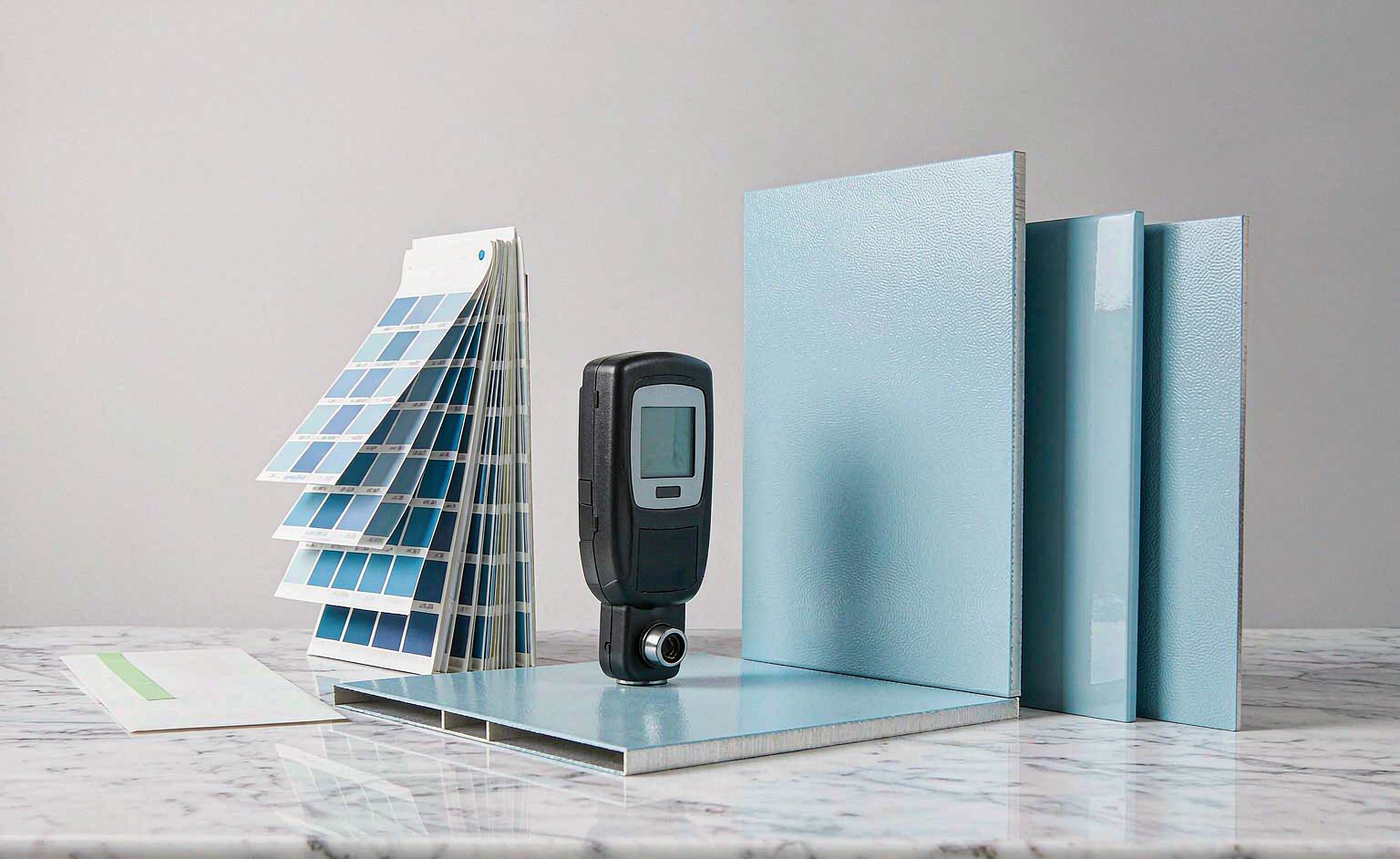
Three variables decide whether a light mark actually recedes on a finished panel: what the substrate looked like before coating, how much film went on, and how the panel is viewed afterward. Substrate condition sets the ceiling. A cold-rolled steel cabinet door with faint sanding marks and a few handling scuffs is a good candidate for visual masking. The same door with a dent, an undressed weld seam, or a patch of rust is not, because those features are geometry and corrosion rather than surface-level optical noise. On indoor parts such as electrical cabinets and signal cabinet enclosures, most of what shows up under factory lighting falls into the light category — fingerprints, sanding direction, faint trolley scuffs — which is exactly the range a fine texture softens best. Coating protection against corrosion is a barrier function that works on sound, properly prepared metal; it is not a way to neutralise existing corrosion. Film build changes the texture itself. Within a 70–150 μm range, a heavier coat can let the powder flow a little more before curing, which can round off the peaks and shift how the surface reads; a lighter coat keeps the pattern crisper. Because texture uniformity and colour can drift at higher film thicknesses, a build change is worth confirming on a physical panel rather than assuming the finish will look identical. Thickness also has to be measured with textured surfaces in mind, since a gauge tip rests on peaks rather than on a continuous plane, and readings depend on how and where they are taken. Viewing conditions decide the rest. Fine texture is normally judged at arm's length under diffuse indoor light, which is how people actually look at a cabinet in a plant room or a control room. Under a raking spotlight at a shallow angle, texture peaks cast longer shadows, the whole surface looks stronger, and small marks can become slightly easier to spot again. Same panel, different light, different reading — which is why a physical sample viewed in the place the part will actually live tells you more than any screen image.
Conclusion
Fine texture masks light metal marks because it changes where light goes, not because it adds hiding material. The micro-textured surface scatters reflection, fragments the field the eye is scanning, and drops the contrast that made a faint scuff noticeable. That works well on indoor panels with handling marks and sanding swirls, and it stops working the moment the problem is a dent, a deep gouge or rust. Treat texture as an appearance tool, keep substrate preparation as a separate step, and check the result on a coated sample under the lighting the finished part will face.
FAQ
Q: How does fine texture powder coating hide light scratches on metal?
A: A light scratch is visible mainly because it reflects light differently from the surrounding area. A fine texture surface already scatters light in many directions across thousands of tiny peaks and valleys, so the scratch no longer produces a distinct band of contrast. The scratch is still present in the coating and substrate; it simply stops reading as a line from normal viewing distance.
Q: Can textured powder coating cover deep dents or rust on a substrate?
A: No. Texture changes how the finished surface reflects light, and that optical effect only reaches features close in scale to the texture pattern. Dents, deep gouges and rust are larger structural and corrosion problems that remain visible and remain a substrate issue. They need to be addressed during metal preparation, before any coating goes on.
Q: Does film thickness change how fine texture looks on an indoor metal panel?
A: Yes. Within the recommended 70–150 μm range, a heavier coat can allow slightly more flow before curing, which softens the peaks and can make the pattern look less crisp, while a lighter coat keeps the texture sharper. Colour and texture uniformity are worth verifying at higher builds, so compare coated samples at the thickness your line will actually run.
Sources / References
How is Coating Thickness Measured? - DeFelsko