


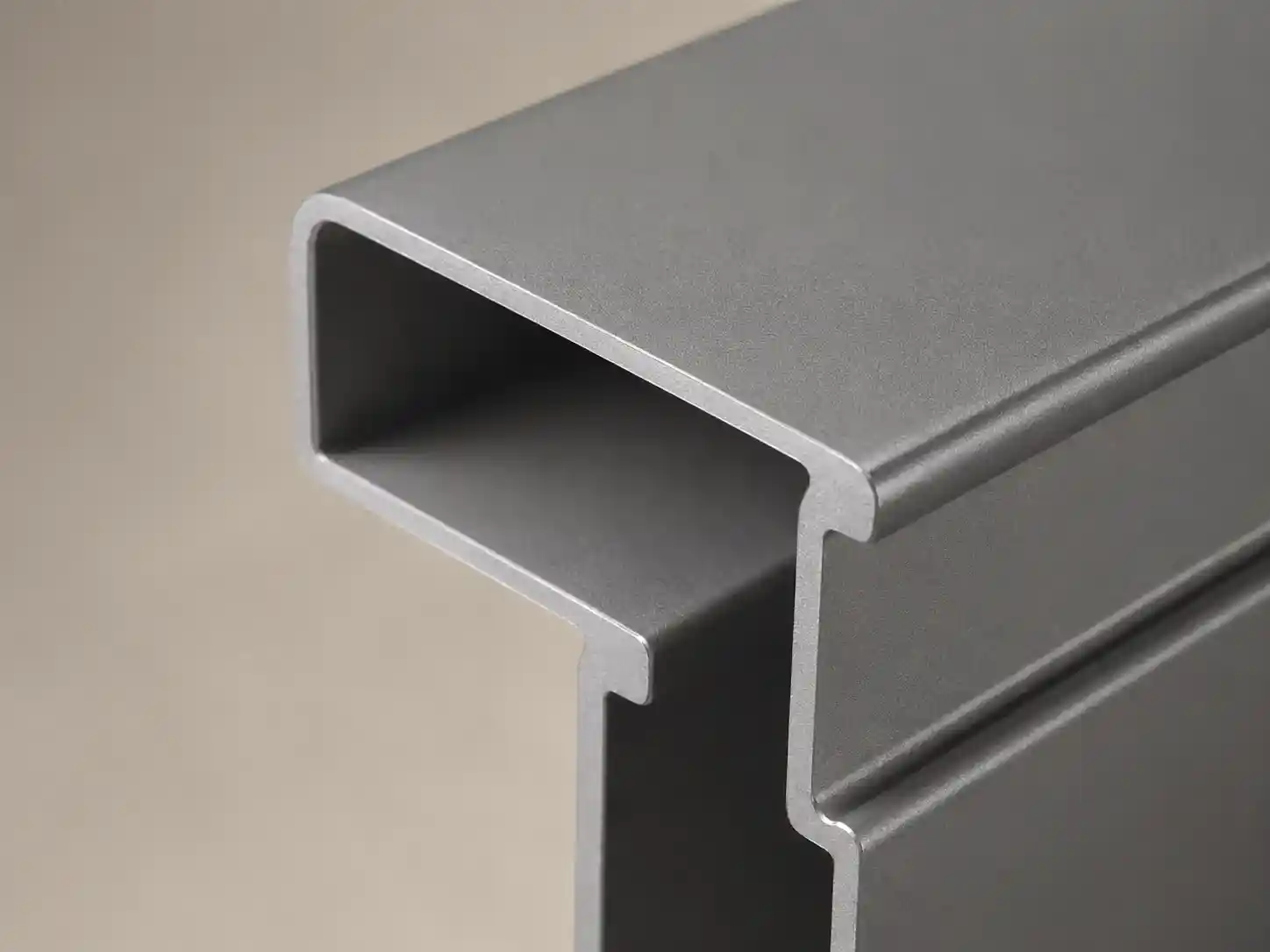
General industrial weatherable powder coatings provide exterior powder coating protection for routinely exposed outdoor metal products, with an indicative durability of approximately 1–5 years. They suit projects requiring basic color and gloss retention, humidity resistance and corrosion protection. Typical applications include outdoor furniture powder coating, railings, lighting equipment, general architectural components, automotive parts, agricultural machinery, general construction machinery and outdoor leisure facilities.
The current range is primarily based on TGIC polyester powder coating technology and includes smooth and textured finishes in multiple colors and gloss levels. Film thickness and curing conditions can be adjusted for the coating line, with selected formulations curing at temperatures as low as approximately 140°C. Destination-market suitability for TGIC and possible PFAS restrictions for textured formulations should be confirmed for the specific product.
The 1–5 year range is a product-positioning reference, not a warranty. Actual service life depends on climate, color, substrate, pretreatment, film thickness, coating system and exposure conditions.







PT0S and PT0F both use TGIC curing systems and are currently positioned for relevant markets outside Europe.
Before export, product suitability should be confirmed against the regulations of the target country or region.
TGIC (triglycidyl isocyanurate) curing agents have been listed as substances of very high concern (SVHC) under EU REACH regulations, with the following main risks:
Health risk:
skin sensitization that may cause contact dermatitis.
Environmental risk:
harmful to aquatic organisms and difficult to biodegrade.
Regulatory trend:
several European countries have restricted or prohibited the use of TGIC in outdoor powder coatings.
Low-gloss products contain matting agents, which reduce coating toughness, so their impact and bending performance is weaker than that of conventional products.
Where high mechanical performance is required, medium- or high-gloss products are recommended, or film thickness may be increased for compensation.
For PT0F sand-textured products, D₅₀ is 30–45 μm.
Fine textures are recommended toward the lower end of the range and coarse textures toward the upper end.
At 70–90 μm film thickness, the texture is clear; above 120 μm, the texture may build up and become less distinct, so spray validation is required.
Oven temperature only represents the air temperature inside the oven.
Because workpieces differ in material, thickness, and shape, their heating rate and actual temperature can differ significantly from the oven setting.
Only when the workpiece surface reaches the specified temperature can the resin and curing agent fully crosslink and form a dense coating film.
Using workpiece temperature as the basis helps ensure:
Consistent curing between batches and different workpieces.
Reduced performance variation caused by different heating profiles.
Accurate control of crosslink density to maintain mechanical and weathering performance.
To prevent oxidation, discoloration, and performance degradation of metallic pigments.
Metallic pigments such as aluminum and bronze powders are highly conductive.
At high voltage, tip-discharge effects can create excessive local current density.
This may cause two problems:
High voltage can also overcharge metallic particles, disturb their trajectories in the electric field, and cause uneven pigment distribution, mottling, or orientation differences.
Reducing the voltage to about 40 kV allows gentler charging, helping maintain metallic gloss and color stability while supporting transfer efficiency and coating uniformity.
Lower voltage also reduces the Faraday-cage effect and can improve coverage on complex edges and recesses.