


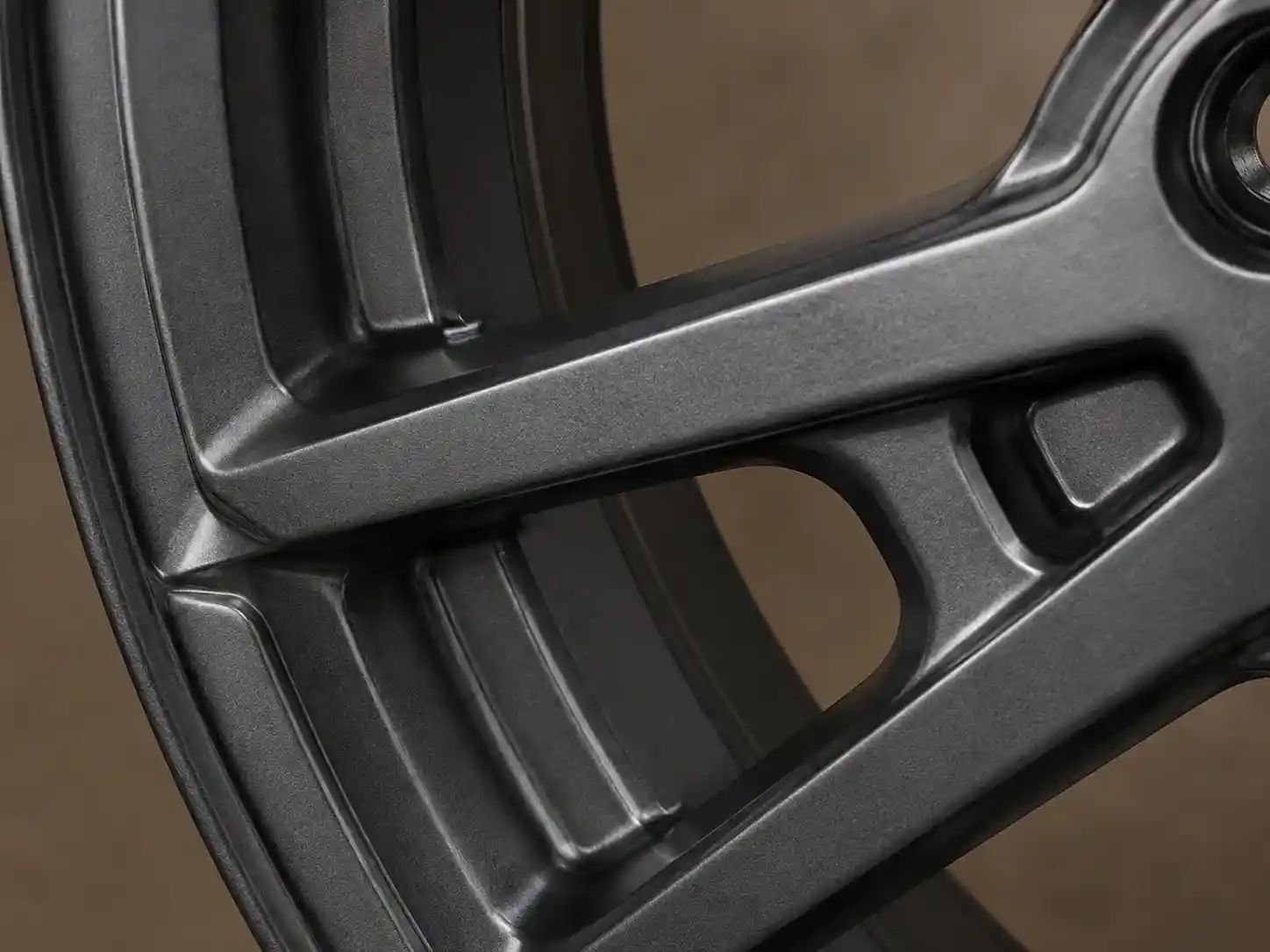
Specialty and functional powder coatings are developed for industrial applications requiring electrical insulation, heavy-duty corrosion protection or dedicated automotive wheel primer performance. Each product is matched to the substrate, coating structure, application process and service conditions.
Epoxy powder coating for electrical insulation is used on traction-battery components, energy-storage cooling systems, motors and electrical equipment, with emphasis on dielectric withstand, insulation resistance, humidity ageing, thermal cycling and retained electrical performance after corrosion exposure. Anti-corrosion powder coating is used on steel structures, metal pipelines, offshore facilities, energy-storage cabinets and construction machinery, focusing on metal adhesion, high-build application, edge coverage, intercoat adhesion and compatibility with topcoats in C4–C5 protective systems. Automotive and alloy wheel powder coating primers provide substrate filling, flow, adhesion and compatibility with subsequent color coats and clear topcoats.
Selection should confirm the required function, substrate, service environment, coating structure and test standard. Project-specific performance targets, application parameters and coating-system compatibility should be validated.






The Specialty & Functional category currently includes three types: insulating powder coatings, heavy-duty anti-corrosion powder coatings, and automotive wheel primer powder coatings.
EP1S Insulating Epoxy Powder Coating:
used for insulation protection of traction-battery components, motor systems, electrical equipment, and similar applications.
EP4S Heavy-Duty Anti-Corrosion Pure Epoxy Powder Coating: used for steel structures, pipelines, energy-storage equipment, and other high-corrosion applications.
HY0S_Wheel Automotive Wheel Primer Powder Coating: an epoxy-polyester hybrid smooth primer for automotive wheels, focused on primer compatibility, surface hiding, and subsequent topcoat requirements.
Automotive wheel primer powder coating is mainly used to establish a stable base layer between the aluminum-alloy substrate and subsequent color paint or clear powder.
For actual wheel-service requirements such as corrosion, mechanical impact, and thermal cycling, performance should be verified as part of the complete coating system rather than judged from the primer layer alone.
Compatibility validation focuses on three core dimensions: intercoat adhesion, material compatibility, and curing compatibility.
Poor compatibility can cause defects such as peeling, cratering, and uneven gloss.
Laboratory pre-validation:
Process simulation:
On-site quick checks:
Common failure responses:
A compatibility database is recommended from material selection through mass production.
EP4S can be used either as a standalone heavy-duty anti-corrosion coating or as an anti-corrosion primer paired with a polyester topcoat.
When used alone, corrosion protection mainly comes from the pure epoxy coating's adhesion, thick-film capability, and barrier effect.
Higher film thickness can be used according to project needs, making it suitable for corrosion-protection applications where long-term outdoor weathering appearance is not a priority.
When used as a primer, EP4S mainly provides substrate adhesion, edge coverage, and a corrosion barrier, while the polyester topcoat provides outdoor weathering resistance and decorative performance.
The TDS states that a single epoxy coating achieves C2–C4 after ISO 9227 NSS 1,000 h testing; when combined with a topcoat as a complete system, it can meet relevant ISO 12944-6 C4–C5 corrosion-protection grades.
For highly corrosive or long-term outdoor projects, a complete primer + topcoat system is generally more suitable and should be designed according to the environmental category.
After 1,000 h at 85°C/85% RH, the EP1S coating showed no obvious discoloration, blistering, or peeling and still met the dielectric withstand-voltage requirement.
After 500 thermal-shock cycles from -40°C to 85°C, it also maintained dielectric withstand performance.
EP1S is designed for a wide film-thickness range of 60–500 μm and can use fluidized-bed dipping or multiple coating passes to meet different insulation-protection requirements.
Increasing film thickness generally helps improve insulation protection and edge coverage, but thicker is not always better.
Excessive film thickness may increase the risk of internal coating defects, uneven curing, or stress, affecting long-term reliability.
The optimum thickness should therefore be determined according to working voltage, structural design, insulation requirements, and application process.
For high film thickness, multiple coating passes with performance verification are recommended.
Key factors are intercoat adhesion, material compatibility, and curing compatibility.
Begin with laboratory panel testing, including appearance after recoating, intercoat adhesion, solvent resistance, and thermal-cycle evaluation, confirming that there is no cratering, blistering, peeling, or other abnormality.
Then conduct a small production trial under actual process conditions to verify the stability of spraying parameters, film thickness, and curing conditions.
For wheel primers such as HY0S_Wheel, particular attention should be paid to bonding with subsequent color paint and clear powder to ensure that the complete coating system meets appearance and long-term performance requirements.