
Introduction: Epoxy and polyester powder coatings both protect indoor metal, but they cure into films with different strengths and different looks, so the choice usually comes down to what the part must survive.
Anyone comparing these two chemistries for an indoor metal part is usually trying to settle one practical question: which film gives the right balance of protection, hardness and appearance for this specific cabinet, frame, housing or bracket. The two systems are not ranked one above the other. They are built from different resins, they crosslink differently, and they reward different priorities. A part that gets wiped down with solvent every week has different needs from a furniture panel that mostly needs to look right and resist a keyscratcher. This comparison stays inside indoor work, where the protection goal is modest and the appearance goal often decides the specification.
What Separates Epoxy from Polyester as Powder Coating Chemistry
Epoxy and polyester powders are both thermoset systems: dry powder, electrostatically applied, then melted and crosslinked in an oven into a hard film that will not re-melt. The difference is in the backbone. Epoxy resins carry epoxide groups that open and react with a hardener, building a tight network with polar hydroxyl and ether groups along the chain. Polyester resins crosslink through carboxyl or hydroxyl functionality with a hardener, producing a less polar, more flexible network. In plain terms, epoxy builds a dense, hard, chemically stubborn film, while polyester builds a tougher, more forgiving film that holds light colours and gloss more predictably when the oven runs hot. Curing behaviour matters just as much as the resin. Epoxy systems are commonly cured around 200°C for ten minutes at object temperature, and low-cure versions can be formulated to start as low as 150°C for heat-sensitive parts or lower-energy ovens. Polyester systems generally sit in a similar 180–200°C band, with low-temperature grades also available. Whatever the chemistry, an undercured film loses adhesion, chemical resistance and impact strength, so the oven profile has to match the part mass and line speed before any resin comparison means anything. This is why the comparison is best kept indoors. Indoor corrosion is a modest, moisture-and-chemistry-driven process rather than a weathering one, and interior metal parts typically see light atmospheric exposure, occasional cleaning agents and handling contact. In that setting, the deciding factors are chemical resistance, hardness, adhesion and appearance fit, which is exactly where the two resin families diverge most clearly.
How Each System Performs on Indoor Metal Parts
The four areas below are where the practical difference shows up on a real production line. The order reflects how often each one decides an indoor specification, not how important it is in absolute terms.
1. Chemical resistance. Epoxy generally wins here. Its dense, polar network slows down solvents, oils, alkaline cleaners and detergents, which is why pure epoxy is the default for electrical cabinets, workshop housings and parts wiped down regularly. Polyester films resist many indoor chemicals well but soften faster against strong solvents and hot detergents, so a part cleaned aggressively is usually a better fit for epoxy.
2. Hardness and impact behaviour. Epoxy cures hard and resists scratching and surface wear, which suits handles, edges and frequently touched surfaces. That hardness comes with less give, so thick epoxy films can chip on sharp impact, while polyester bends further before it breaks. Published laboratory data for a pure epoxy indoor grade shows 50 kg·cm reverse impact and at least 5 mm cupping with no visible cracking, which shows a well-formulated epoxy is far from brittle.
3. Adhesion to metal. Both systems bond well to correctly pretreated steel and aluminium, and both fail quickly on a poorly cleaned substrate. Epoxy has a long-standing reputation as the stronger bonder on blasted or phosphated steel, which is why it appears on structural housings and heavy castings. Polyester holds its own on general indoor sheet metal and is often the simpler choice where parts get formed after coating.
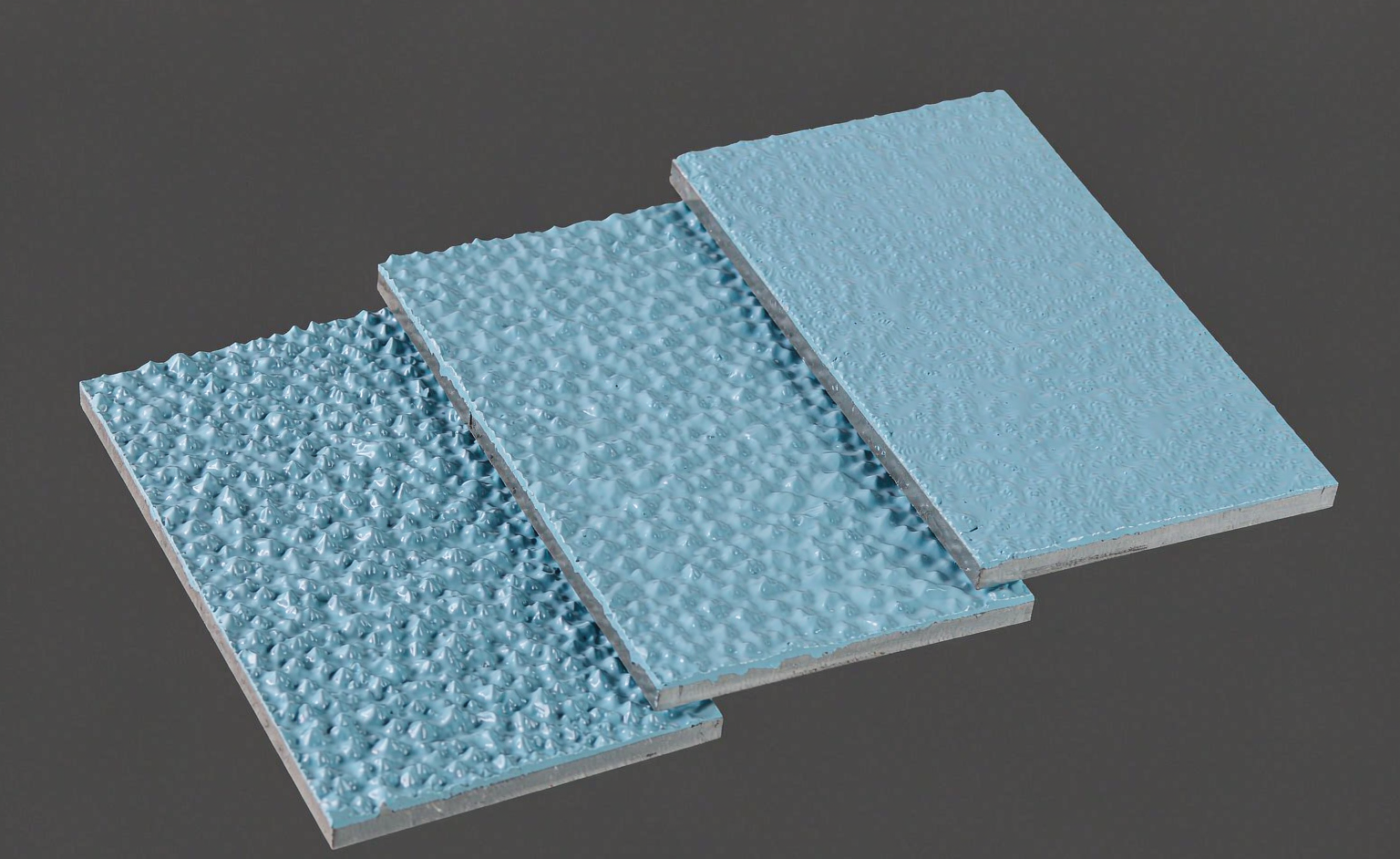
4. Appearance fit. This is where the two diverge visibly. Epoxy supports very matte, textured finishes with low gloss readings, and it hides light substrate marks well; a fine-texture interior epoxy such as RAL 5012 EP0F-400004 reads at or below 10 GU at 60°, giving a flat, sand-like surface that plays down weld dressing and handling scuffs. Polyester is usually chosen for smoother, brighter or more colour-critical work, and it holds pale shades through overbake more predictably, since light epoxy films can shift tone if the oven overshoots.
Why the Application Context Should Guide the Chemistry Choice
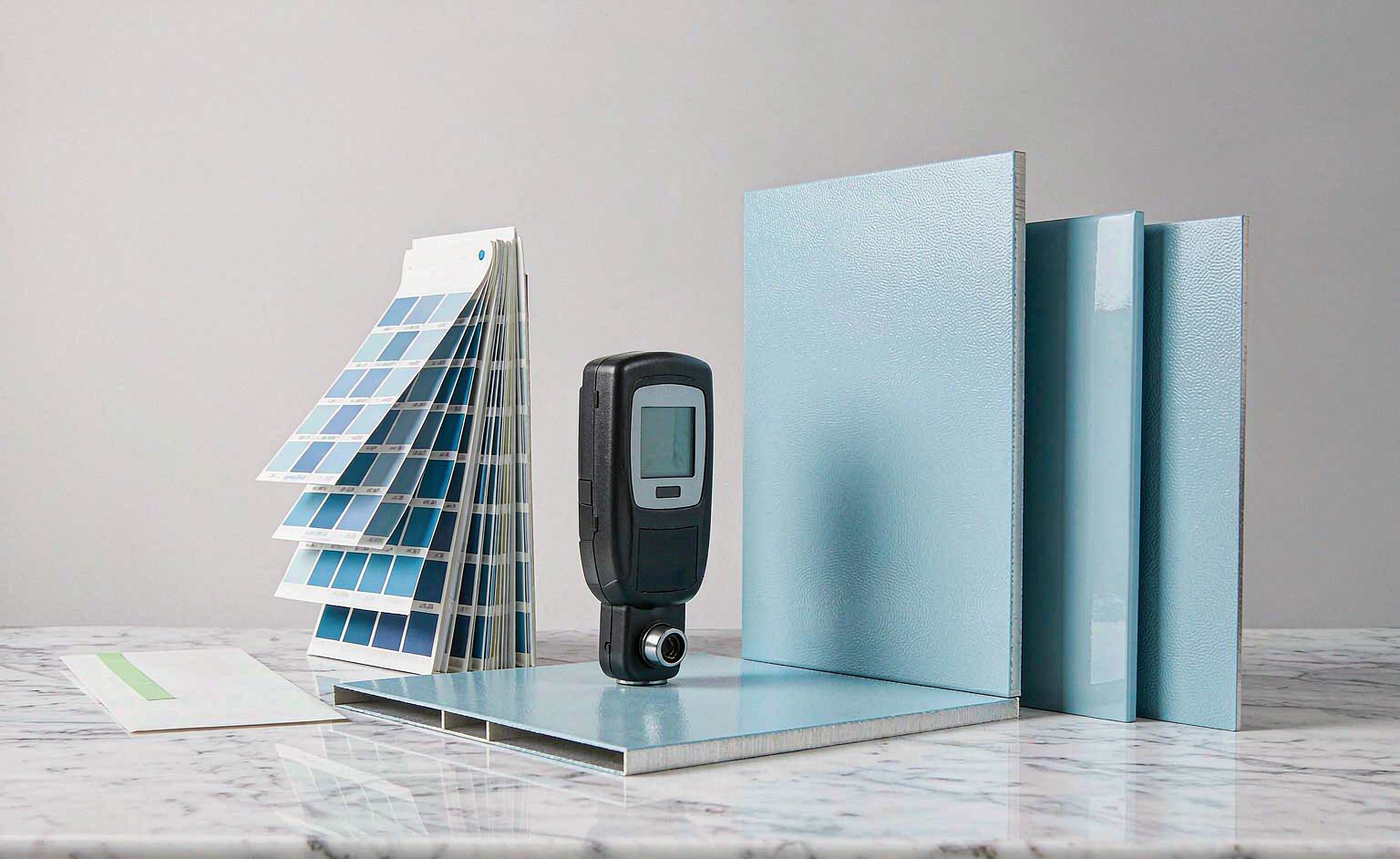
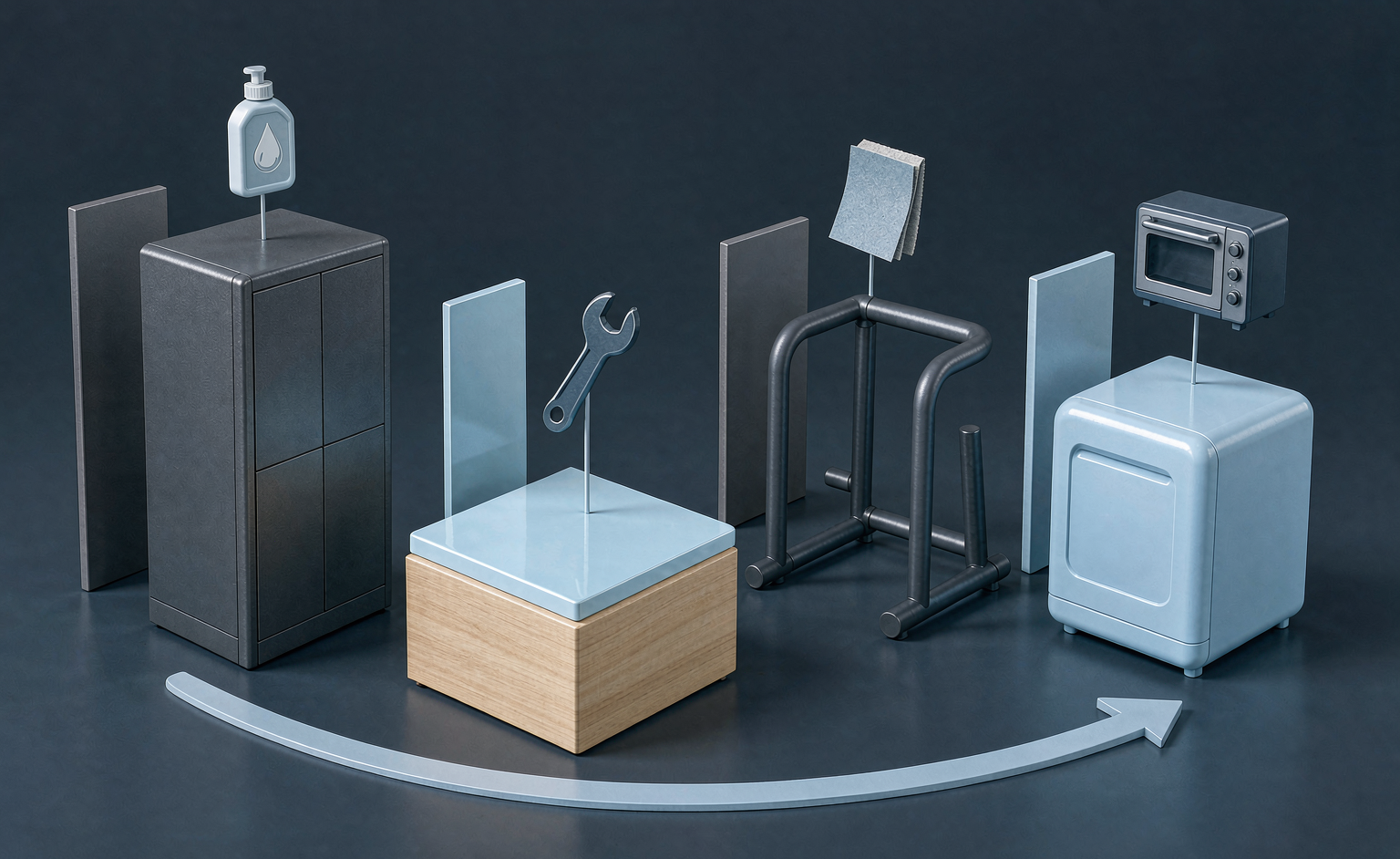
Walk through a plant that coats indoor metal parts and the same pattern appears across industries: the part's daily life, not the data sheet, tends to pick the chemistry. Electrical and signal cabinets are mostly flat panels that need corrosion protection at a moderate film, resistance to cleaning agents, and a surface that hides small fabrication marks; a matte fine-texture epoxy fits that brief closely. Indoor furniture puts appearance first, where colour, gloss level and texture feel carry more weight than chemical resistance, so a smoother or more colour-stable system often wins even if its barrier is slightly weaker. Fitness equipment sits in between and leans on hardness plus chemical resistance, because frames and weight stacks meet sweat, sanitiser and constant abrasion. Indoor appliance housings reward colour consistency and a clean look across large volumes, so the priority shifts toward batch-to-batch colour control and gloss stability rather than maximum chemical toughness. In each case, the question is the same: which property is the part most likely to be judged on? Process conditions then narrow the field further. If the oven is limited to 150°C because of part mass or heat-sensitive components, the chemistry has to be formulated for that cure, not assumed. Film thickness is another lever: most indoor decorative and protective work lands between 70 and 150 µm, and once the film climbs above the target range, texture and colour can drift and impact behaviour changes. Measuring cured thickness with a gauge, as coating inspectors do, keeps those comparisons honest. Powder reclaim, transfer efficiency and texture uniformity all respond to the same variables, so a resin that performs beautifully at 80 µm may behave differently at 140 µm on the same line.
Conclusion
Epoxy and polyester are not rivals with a fixed ranking; they are two resin systems with different centres of gravity. Epoxy brings a dense, hard, chemically resistant film that bonds strongly to pretreated metal and supports very matte textured finishes. Polyester brings flexibility, easier colour control in pale shades and forgiving general-purpose durability. For indoor metal parts, the useful habit is to name the dominant exposure first, then the appearance target, then the oven and film thickness the line can actually hold. Formula choices and cure conditions still shift real behaviour, so the final call belongs to a coated sample run on your own line.
FAQ
Q: What is the main difference between epoxy and polyester powder coating for indoor metal parts?
A: The resin chemistry drives everything else. Epoxy crosslinks epoxide groups with a hardener into a dense, polar film that resists chemicals and scratches strongly and bonds tightly to pretreated steel. Polyester crosslinks polyester resin with a hardener into a more flexible film that holds pale colours and gloss more predictably. Indoor parts feel that difference in cleaning resistance, impact behaviour and surface appearance.
Q: Does polyester powder coating always outperform epoxy for indoor use?
A: No. Polyester leads on flexibility and colour stability in light shades, but epoxy generally leads on chemical resistance, hardness and adhesion to blasted or phosphated steel, which is why pure epoxy dominates cabinet and housing work. The right answer depends on what the part meets daily: aggressive cleaners and abrasion favour epoxy, while colour-critical furniture surfaces often favour polyester.
Q: How does film thickness affect the performance comparison between epoxy and polyester powder coating?
A: Both systems are usually specified between 70 and 150 µm, and both lose barrier protection below that window. Above it, texture and colour can shift, gloss readings scatter, and hard epoxy films may chip more readily on impact while polyester keeps more flexibility. Verifying cured thickness at several points on the part keeps a resin comparison meaningful rather than a guess.
Sources / References
How is Coating Thickness Measured? - DeFelsko
Related Examples
RAL 5012 Fine Texture Interior Epoxy Powder Coating (EP0F-400004)