
High Durable Polyester
High Durable HAA and TGIC Systems for Exterior Metalwork
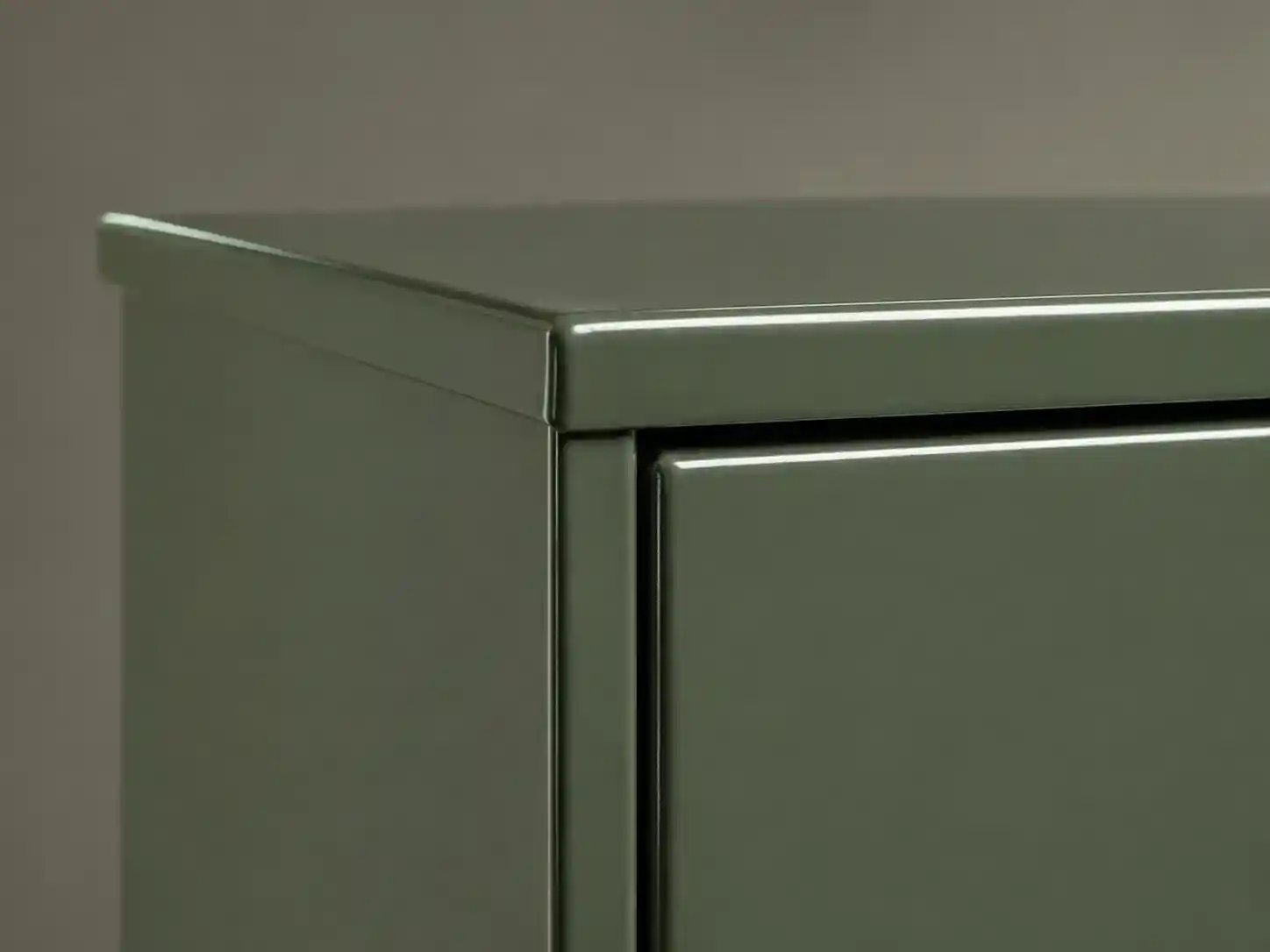
This category combines high durable polyester-HAA and polyester-TGIC powders in smooth and textured finishes for exterior metal products requiring stronger weathering performance than standard durable grades.
Published TDS data for the mapped PP1 and PT1 systems includes 1000-hour xenon ageing with gloss retention of at least 50%. PP1 HAA grades support TGIC-free selection, while PT1 and PP1F TGIC grades provide established processing options, including AAMA 2603-oriented products where specified.
Typical uses include architectural components, doors and windows, railings, lighting equipment, automotive parts, energy-storage cabinets and construction machinery. Final selection must follow the individual TDS, target market and project qualification requirements.
Selected Product of this range
High Durable Polyester FAQ
How is the weathering performance of powder coatings evaluated?
Weathering performance is the ability of a coating film to retain its original properties—such as color, gloss, adhesion, and mechanical performance—under long-term outdoor exposure to UV radiation, temperature changes, humidity, rain, and atmospheric pollution.
Weathering performance is mainly evaluated through accelerated artificial aging tests (QUVB-313 or QUVA-340), with gloss retention and color change as key indicators.
What are the regulatory differences between TGIC and HAA systems for export to the European market?
For export to Europe, PP1F (HAA textured) or PP1S (HAA smooth) should be selected first.
Both use HAA (hydroxyalkyl amide) curing systems and are explicitly stated as “TGIC-free, compliant with relevant REACH restrictions, and suitable for relevant countries and regions including the European market.”
PT1S uses TGIC (triglycidyl isocyanurate) as the curing agent, and its TDS states that it is “exportable to countries and regions outside Europe,” because TGIC has skin-sensitization concerns and is restricted under REACH.
Therefore, for European customers, HAA-system products must be selected; PT1S is only suitable for non-European markets such as the United States.
Which product should be selected for architectural aluminum windows and doors requiring a sand-textured finish and 10-year weathering durability?
PP1F High-Durability Polyester HAA Textured Powder Coating is recommended.
PP1F is designed for sand-textured finishes and offers fine and coarse sand textures, with gloss ≤10 GU (matt).
It is designed for 6–10 years of outdoor weathering durability and can be benchmarked against Qualicoat Class 1 and GB/T 5237.4-2017 (Class I); after 1,000 h xenon-arc aging, gloss retention is ≥50%.
Architectural aluminum profiles and windows/doors are the first typical applications listed in the PP1F TDS.
Recommended film thickness is 70–120 μm, with good hiding ability; curing is 200°C × 10 min, with a 160°C low-temperature curing option available.
PP1S is a smooth product and cannot provide a sand texture; PT1S has similar weathering durability but contains TGIC and is also smooth, so neither meets the texture requirement.
What causes uneven coarse and fine sand texture?
Uneven sand texture is usually related to powder particle-size distribution, dispersion of the texture system, film thickness, spraying parameters, and curing conditions.
Deviation from the designed particle-size range or changes in the fine/coarse particle ratio may alter texture size and uniformity.
Insufficient film thickness may prevent full texture development, while excessive thickness may make the texture less distinct.
Spray-gun voltage, reclaimed-powder ratio, workpiece heating rate, and oven-temperature uniformity can also affect texture consistency across different areas.
Keep particle size, film thickness, spraying parameters, and curing conditions stable, and conduct a new trial spray after changes in reclaimed-powder ratio or process conditions.
What is the difference between Qualicoat Class 1 and AAMA 2603?
QUALICOAT Class 1 and AAMA 2603 both address standard-grade outdoor coatings for architectural aluminum, but their evaluation systems differ.
QUALICOAT places greater emphasis on integrated quality control of the powder coating, pretreatment, and overall coating system.
AAMA 2603 mainly covers organic coatings on architectural aluminum extrusions and panels and includes performance requirements such as one year of South Florida outdoor exposure.
AAMA 2603 also specifies requirements for color, gloss, adhesion, chemical resistance, humidity resistance, and salt spray.
The same powder coating can be designed through formulation, pigments, and pretreatment to meet the relevant requirements of both standards, but QUALICOAT Class 1 and AAMA 2603 are not directly equivalent or interchangeable.
Actual projects should select the appropriate verification route based on customer location, building codes, and specified standards.
The PP series is mainly designed around the QUALICOAT system and can be matched and verified against AAMA 2603 requirements for specific projects.